Online sales platforms – what are marketplaces and why are they becoming so popular? We investigate.
Online shopping is no longer just the future – it’s an everyday reality. Nowadays, more and more companies and creators are moving their business online, seeking a place where sales are fast, scalable, and almost instantly available. This is where online sales platforms come in, completely changing the game. From Allegro and Amazon, through OLX and Vinted, to niche, vertical services – a sales platform can look completely different but always has the same goal: to connect the seller with the customer in the simplest way possible. See how marketplaces work, what they offer sellers and buyers, what to watch out for – and where to find a place for yourself.
Marketplace – What exactly is it and how does it work behind the scenes?
In simplest terms, a marketplace, or an online sales platform, is a place where many different sellers offer their products, and one common technical infrastructure handles everything: payments, ordering system, reviews, and sometimes even logistics. Unlike a traditional online store, a marketplace does not focus on one brand – it’s an online trading platform that aggregates offers from many people or companies. The customer enters, compares prices, and chooses what suits them best. It’s convenient, efficient, and increasingly popular. No wonder today’s sales platforms account for most global online transactions.
International shopping platforms are not only Allegro and Amazon – types of marketplaces worth knowing
Marketplaces can be divided in several ways. The simplest is by transaction participants: B2C (business – customer), B2B (business – business) and C2C (individual – individual).

Discover the potential of your personal brand!
Join a platform where creators can earn money online and build their personal brands by recommending products and services from brands and partners they truly respect.
- Allegro and Amazon are classics B2C,
- Alibaba mainly serves B2B,
- while Vinted and OLX follow the C2C model.
But equally important is the division according to specialization: so-called horizontal sales platforms offer everything – from electronics to cosmetics, whereas vertical ones focus on a specific niche, like Etsy (handmade crafts) or Booking.com (lodging services). The choice of the right platform depends not only on what you want to sell but also to whom.
From auctions to Prime logistics – what does the purchasing process on marketplaces look like?
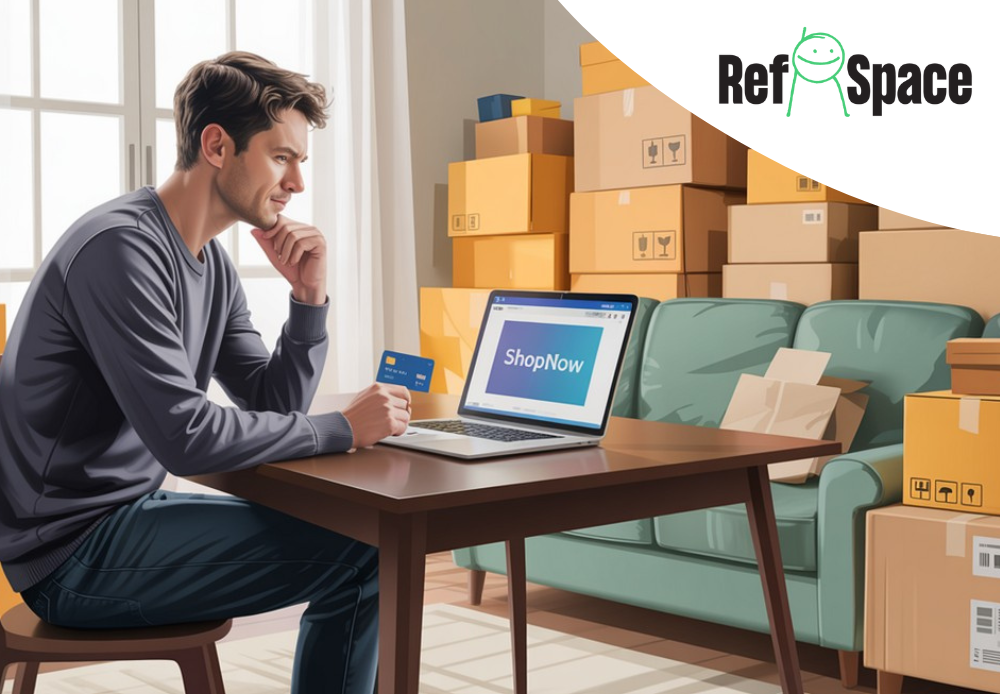
Shopping on marketplaces is incredibly intuitive – and that’s why they work so well. The customer browses products, compares offers from different sellers, pays directly through the online sales platforms, and then tracks the delivery status. Depending on the model,the seller may be responsible for shipping, or the entire process is taken over by the platform (e.g., Amazon FBA). The whole process is so automated that the user often doesn’t realize how many companies are behind their single “buy now” click. For the buyer, it’s convenience, for the seller – an invisible but powerful machine that does a large part of the work.
A seller without their own shop? Marketplace as a springboard to e-commerce
Not everyone needs to have their own e-shop. Thanks to marketplaces, even someone who has never sold anything online before can start with minimal costs. An online sales platform eliminates the need to create a website, implement a payment system, or ensure data security. Registration, product description, photos – and you can operate. This is a huge opportunity especially for small brands, freelancers, craftsmen, and online creators. And since everything can be set up with a few clicks, a sales platform becomes the simplest entry into the world of e-commerce.
Why do buyers return? Convenience, prices, and security in marketplaces
Customers love marketplaces for convenience. The ability to find everything in one place, quickly compare prices, promotions, and additionally a rating and review system. Online sales platforms provide users more than just products – they offer a sense of security. Thanks to escrow systems (money is held until delivery), sales platforms effectively eliminate many risks associated with online shopping. Additionally, customer service, returns, guarantees – everything in one panel. That’s why 74% of Poles declare that shopping through marketplaces is more convenient than in a classic online store.
How much does it cost, and who benefits? Platform earning models and commissions
Most marketplaces operate on a commission basis– you sell, you pay a certain % of the transaction. There are sometimes subscription fees (e.g., for “professional” accounts), or paid options to promote an offer. On Allegro or Amazon, commissions range between 5 and 17%, depending on the category. For some, it’s a lot, for others – the price for access to a huge customer base and ready infrastructure. Sales platforms also earn from data – anonymous information about purchasing preferences are extremely valuable to marketers. From the platform owners’ perspective, the marketplace model is a machine for generating billions.
Hidden risks – greenwashing, counterfeits, and invisibility in search results
Marketplaces have many advantages, but they also have their dark sides. High competition means that many sellers disappear in the crowd – only 7% of users browse the second page of search results. There are also problems with counterfeits (e.g., on AliExpress), and even issues with greenwashing – products marked as “eco” that do not meet any standards. For a beginner seller, it’s a significant challenge: how to stand out among hundreds of identical offers? And for the customer – how not to get fooled? That’s why choosing the right sales platform and ensuring the transparency of the offer is fundamental today.
Where is the market heading? Marketplace trends for 2030 and the growing dominance of platforms
Experts agree: online sales platforms will become even more important. By 2030, up to 75% of all online transactions could occur through marketplaces. New technologies come into play – algorithms personalizing offers in real-time, drone deliveries, integration with the metaverse, or NFTs as loyalty mechanisms. At the same time, the pressure for transparency and regulation is growing – the EU is already working on regulations limiting the dominance of the biggest players. In this reality, more important will be alternative, conscious sales platforms that combine availability with quality and transparency.
RefSpace – a marketplace for creators who want to earn immediately
In a world dominated by large marketplaces RefSpace takes a completely different direction. It’s a online sales platform, which doesn’t require a warehouse, own store, or investment in logistics. All you need is an account, choose products from the catalog (like books, cosmetics, accessories), add them to your “Space” and start showcasing them – in a video, post, or description. RefSpace functions like a modern, lightweight online sales platform, in which you are the creator, and the entire technical side – payment processing, delivery, returns – is handled by suppliers.
It’s the perfect option for those who want to earn through referrals, without own products and without investing in an e-shop. What’s more, RefSpace integrates with YouTube – products can appear automatically under your videos, without additional configuration. And if you want, you can also sell your own services – like consultations or online meetings – without calendars, apps, and scheduling via email. Everything is enclosed in one link. RefSpace is an alternative to large marketplaces – created for creators who want to act quickly, simply, and in their own way.

CEO of RefSpace LTD, a social e-commerce platform that connects creators, brands, and communities in a single ecosystem. With 25 years in digital marketing and e-commerce, she has been a speaker and panelist at numerous industry conferences. Today, she is developing RefSpace as a new destination for authentic recommendations, content, and sales.