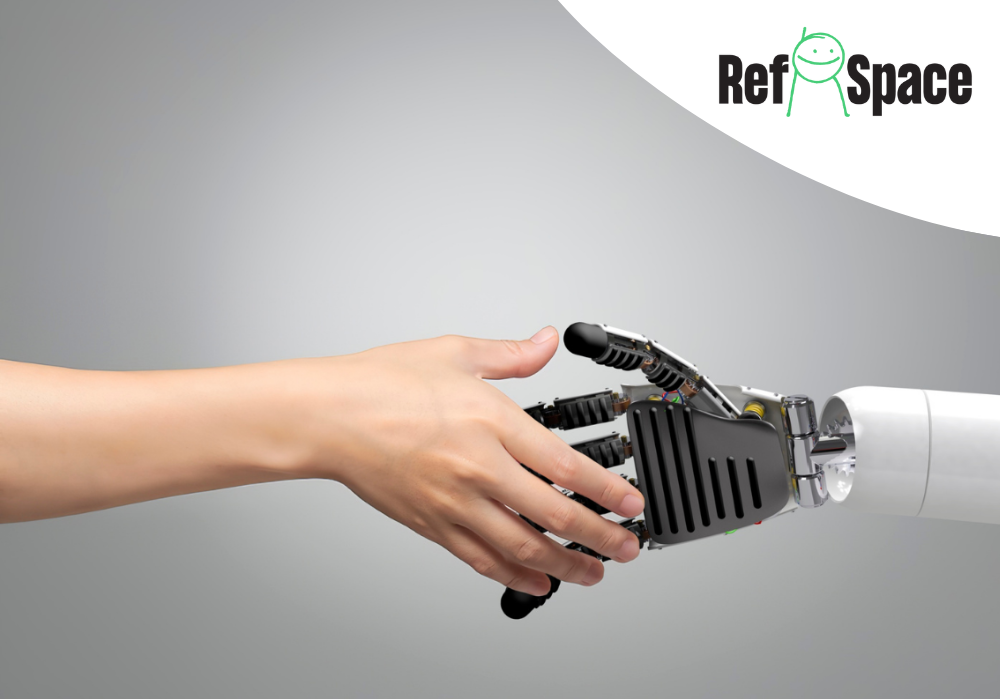
AI in Social Media – How to Use Artificial Intelligence to Make Your Content Perform Better Than Ever?
AI in social media is no longer an experiment, but a daily tool for marketers, creators, and companies. It can generate content, analyze data in real-time, predict trends, and personalize messages to individual recipients. In this post, you’ll see what solutions are worth knowing nowadays, how to use them without losing authenticity, and what to watch out for so automation doesn’t turn against you. In short – everything you need to know to make social media AI work for you, not against you.
Social media AI in practice – how to generate content that truly engages your audience?
Content automation is more than just posting ready-made posts from a generator. Social media AI provides tools that can analyze what works in your industry and then create materials tailored to algorithms and audience expectations. This means you can prepare a post, description, or video script that genuinely increases the chances of interaction in just a few minutes.
However, it’s not about completely handing over content creation to a machine. The best results occur when you combine data and automation with your own style and knowledge of the audience. AI will suggest headlines, a list of hashtags, or several CTA versions, but you decide what sounds natural and fits your brand.

Discover the potential of your personal brand!
Join a platform where creators can earn money online and build their personal brands by recommending products and services from brands and partners they truly respect.
A well-designed process with AI can cut the time spent on a content calendar by up to 60%. This means you can devote more energy to talking with your audience, responding to trends, or preparing materials that offer more than standard “feed posts.”
AI in social media and graphics – tools that save time and make an impression
Graphics, animations, short videos – these elements in social media can determine whether someone stops at your post. AI tools like DALL·E, Midjourney, or Runway can quickly generate professional-looking visuals that are contextually appropriate. Canva with AI functions not only suggests a ready-made template but also automatically selects colors or fonts to match your visual identity.
These types of solutions are especially useful if you work quickly and need materials “right now.” Instead of spending hours perfecting a graphic from scratch, you can have a ready project in 10–15 minutes and immediately test its effectiveness.
Of course, it’s important to remember that AI is a tool, not a magic wand. It works best when you have a clearly defined brand aesthetic and know what you want to showcase, with AI assisting you in preparing the final version.
Personalizing messages with AI in social media – how to meet your audience’s needs in real-time?
Good social media campaigns are those that deliver the right message, to the right person, at the right time. AI in social media can analyze demographic data, purchase history, past interactions, and content preferences, then create a message tailored to a specific recipient.
This is no longer segmentation like “women 25–34 from large cities.” AI can create micro-personalization – a different headline for someone who clicks an ad on Monday morning versus someone who sees it on the weekend evening. This approach significantly increases the chances of reaction and clicks.
Brands also use this to predict trends – AI analyzes which content is starting to gain popularity and suggests how to take advantage of it before competitors do. The result? Greater engagement, higher CTR, and a real impact on sales.
Social media AI in customer service – chatbots that respond before you even log in
Quick response in social media is one of the key elements of building a positive image. Advanced AI-powered chatbots can answer customer inquiries in real-time, 24/7, without breaks for sleep or weekends. They can provide product information, help choose an offer, and even take orders.
The important thing is that today’s chatbots no longer sound like automata from a decade ago. Generative AI enables natural, contextual conversations that resemble a dialogue with a human. And if the question is too complex, the chatbot can forward it to the appropriate team member.
This makes customer service faster and more efficient, allowing you to focus on resolving more complex, less routine inquiries. It’s also a way to increase customer satisfaction by providing answers when they need them – not when you have the time.
Analytics and monitoring with AI in social media – how to draw conclusions that truly improve results?
Publishing content “in the dark” is a waste of time and budget. Social media AI allows you to continuously monitor brand mentions, analyze sentiment in comments, and predict campaign effectiveness based on historical data.
This lets you respond faster – if you see the tone of the discussion around your brand turning negative, you can immediately implement corrective actions. AI will also suggest the optimal publishing times, predict which content will have the most engagement, and point out influencers who can help with promotion.
The greatest advantage of such analytics is that you don’t have to wait until the end of the campaign to assess its effects. You can adjust actions along the way, which often determines whether the budget is used effectively or wasted.
The best AI tools for social media in 2025 – what is worth knowing and testing?
In 2025, the choice of AI-based tools is so large that it’s easy to get lost. Not all platforms will be necessary for you, but it’s worth knowing those that can truly streamline daily work. Hootsuite with OwlyGPT is a great example – it offers both content creation and real-time trend analysis in one place. Meanwhile, Buffer AI Assistant allows you to generate and adapt posts to different platforms, speeding up publication while maintaining a consistent tone.
For online stores, an interesting option is Predis.ai – integrates with Shopify, publishes posts automatically, and analyzes competition. There are also specialized tools: Socialmonials for contest campaigns and UGC content, Ocoya for post planning with AI features, or NapoleonCat, which automates comment moderation and provides comprehensive reports.
Instead of testing everything at once, it’s better to choose 2–3 platforms that actually fit your operational model and learn to fully utilize them. Only then will you see a real difference in time and work quality.
Business benefits of AI in social media – numbers that make a difference
From a business perspective, AI in social media is not just a trendy addition, but a real impact on costs, time, and campaign results. Studies show that AI-based tools can reduce the time to create a monthly content calendar by up to 60%. Optimizing publishing times can increase engagement by 40%, and message personalization – boost clicks by 30% and revenue by 20%.
Moreover, 30% savings in marketing budget while simultaneously increasing efficiency is difficult to ignore. 82% of marketers already declare that AI has a positive impact on their campaign results.
The biggest benefit? Better audience segmentation and more precise targeting, allowing you to focus on those truly interested in your offer – without wasting the budget on random clicks.
Limitations and challenges of AI in social media – when can automation be harmful?
Although the possibilities are impressive, AI in social media is not free from issues. The lack of copyright protection for AI-generated content remains an open question – especially concerning graphics and video. Added to this is the risk of GDPR violations due to excessive personalization and uncertainty regarding the quality of input data.
Another challenge is maintaining authenticity. Too much automation can make your content look like hundreds of others – lacking individual style. This is a simple path to losing audience trust.
That’s why it’s crucial that human verification is a constant part of the process. AI should support creativity, not replace it. It’s also worth remembering to use technology responsibly to avoid situations where the tool does more harm than good.
The Future of Social Media AI – Trends That Will Change Your Strategy
Looking at the pace of development, it can be confidently said that AI in social media is just getting started. Integrations with VR and AR will play an increasing role, allowing audiences to engage in immersive experiences without leaving home. Chatbots will become even more advanced – not only responding but also predicting user needs and offering ready-made solutions.
Automation will encompass entire campaigns – from planning to content creation to result analysis. Micro-personalization at the individual user level will become standard, and companies will need to find a balance between automation and maintaining a human approach.
A particularly important trend will be transparency in the use of AI. Audiences are increasingly paying attention to the origins of content and whether a brand honestly discloses how it is created. This transparency might become one of the main factors building trust in the coming years.

Customer Service & Marketing Specialist at RefSpace, passionate about AI technology development and shopping psychology. She is responsible for customer service, collaboration with Creators and Suppliers, and application development. Her extensive experience as a Makeup Artist allows her to better understand the mechanisms of trust in recommended products and understand customer needs.