
How to Find Endless Video Ideas for YouTube? 10 Proven Methods!
Lack of ideas is not a lack of creativity—it’s a lack of a system. You can be the most brilliant person in the world, but if you sit down to create every day with a blank sheet, after a week you’ll feel like giving it all up. And no, it’s not because YouTube “doesn’t work anymore,” algorithms “have changed,” or people “no longer have attention spans.” The most common cause of creative burnout is the chaotic last-minute gathering of ideas—like when you’re scrolling TikTok hoping something will suddenly “click.”
What to record on YT? Enter a word and watch as the internet suggests topics for you!
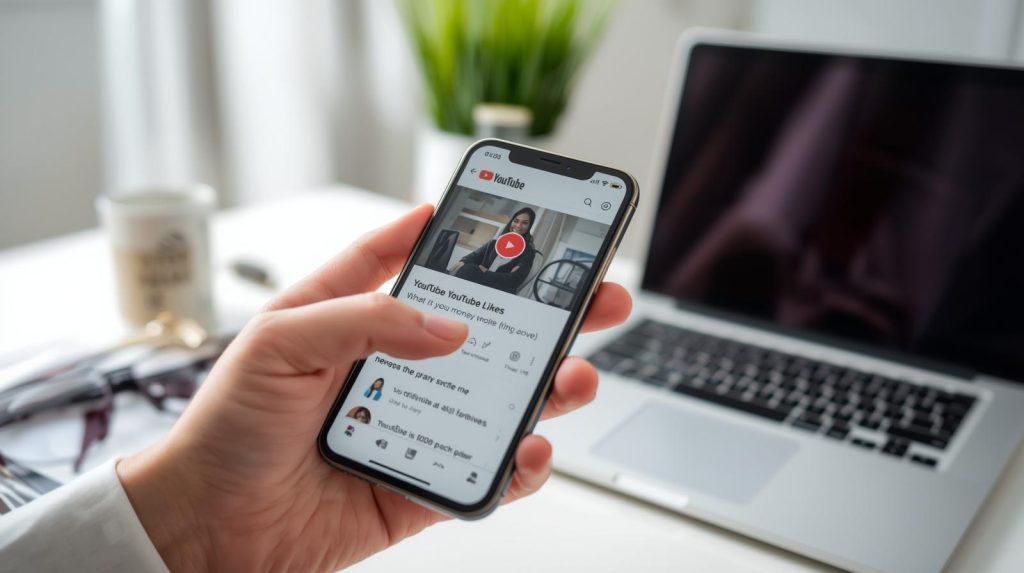
The simplest way to discover what people are really searching for is to just start typing. Literally—go to YouTube, enter any keyword from your niche, and read what the system suggests. These suggestions are real user queries, not random phrases. This means each of them has built-in potential for reach. And the best part—this method is completely free and instantly available.
Why use YouTube Suggestions?
Discover the potential of your personal brand!
Join a platform where creators can earn money online and build their personal brands by recommending products and services from brands and partners they truly respect.
- You see what people are actually typing, not what you think interests them.
- Each suggestion is a ready film title that fits into SEO.
- You can operate without any tools—just a browser is enough.
- You’re assured the topic already has traction and view potential.
Many creators do exactly the opposite—they first record the video, and only then think about how to name it. You can reverse this process: start with a keyword, build context around it, and only then create the content. Type “how to earn”—YouTube will suggest: “how to earn on Instagram,” “how to earn without showing your face,” “how to earn as a teenager”. Each of these phrases is a topic for a separate, strong video with viral potential.
What to record on YouTube? Your comment is my script—how to make films from viewer questions?
The best film ideas come from… comments under your own materials. That’s where specific questions appear that people really want to know the answer to. If someone asks a question under your video, it means they didn’t get a full answer—and that’s your moment to expand on the topic in a separate material. Not only does it save time on research, but it also builds viewer loyalty, as they see you take them seriously.
What are the benefits of making films based on comments?
- You know that the topic already resonates—the question was asked in the right context.
- You have a ready content structure—the question becomes the title, and the answer is the content.
- You build interaction and trust—the viewer feels noticed.
- You create content based on real problems, not assumptions.
Try this for a week. Open your channel, TikTok, or Reels and read the latest comments. Write down every question in a spreadsheet. You can do this once a week. After a month, you’ll have dozens of topics that—importantly— come from your community. One Instagram creator we analyzed generated over 40 video series ideas from comments in 3 months. And each had over 20K reach. Coincidence? No.
YouTube film ideas: Reddit and Facebook are places where people ask without filters
If you want to know what truly bothers people, visit Reddit or Facebook groups. There are no filters, no “beautifying topics”—instead, there are dozens of raw questions begging for a video response. These aren’t your followers, so you can gain a new audience looking for exactly what you can provide. The key? Don’t seek inspiration. Look for problems.
Why are Reddit and FB groups gold?
- Users ask honest, often repeated questions.
- You can quickly check how many people have the same problem (upvotes, comments).
- You see how people describe their problem —and you can use these words in the film title.
- It’s a great place for spotting trends before they reach YouTube or TikTok.
Go to a subreddit like r/Instagram and see how many times questions like “how to increase reach?”, “what to do if I have a shadowban?”, “why do I have fewer views?” appear. Each of these questions is a ready topic for a film that addresses real user frustration. A friend of mine built an entire channel around answering frequently asked questions from Reddit—in 6 months, he had over 60K subs. Not because he was super creative. Just because he could listen.
What films to make on YT? Catch the wave before it sinks—how Google Trends suggests hits before they become big?
If you want to get into a topic before it goes mainstream, Google Trends should be your morning paper.
This tool shows real interest in a given topic in real-time. Enter a phrase from your niche, set the filter for the last 7 days or month, and then check which queries are currently exploding in searches. You can build a film exactly on this topic before someone else does.
What can you gain from Google Trends?
- Access to real-time data —what people are currently searching for on Google.
- The possibility to record a “trending” video before it gets crowded.
- Suggestions related to topics that are just gaining popularity.
- Ready-made slogans and phrases worth using in the title and description.
Example? If in April you notice an increase in searches for the “new TikTok algorithm,” you have a few days to record a video explaining what has changed and how to leverage it. Afterwards, the topic becomes over-discussed. Numbers don’t lie – what’s growing in Trends often explodes on YouTube 3-5 days later. This is your time window.
Great ideas for a YT episode. Comments under competitors’ videos? They are your free R&D agency!
Sometimes it’s worth stepping outside your bubble and seeing what other creators lack – and filling that gap. It’s not about copying topics. It’s about reading comments under popular videos in your niche and catching what hasn’t been said there. It could be a question someone asked but didn’t get an answer to, or a topic only touched on superficially.
Why is it worth analyzing competitors’ comments?
- You get ready insights about what puzzles people.
- You see gaps in the content – and you can fill them better than the original author.
- You learn which topics generate emotions, discussions, and questions.
- You create content based on real gaps, not assumptions.
It works because people in comments are honest. They don’t sugarcoat things. They write what they don’t like, what they’re missing, what they would like to see. And that’s the best brief you can get for free. Just go to 2–3 of the largest channels in your niche and read the comments under the latest materials. In 30 minutes, you have 10–15 specific questions = ideas for your own videos.
AI suggests better than a colleague from the industry – you just need to know what to input
Don’t know what to record? Then ask AI. Although today, that’s no revelation…
Tools like ChatGPT, Team-GPT or YesChat.ai can generate dozens of video ideasin seconds if you just formulate the prompt well. And it’s not about generic: “give me a video idea,” but specifics like: “Generate 10 TikTok ideas about beginners’ mistakes in e-commerce. Educational, simple, with viral potential.”
Why is it worth using AI?
- You save hours on manually coming up with topics.
- You can filter by style: educational, funny, tutorials, case studies.
- It works 24/7 – generate ideas whenever it suits you.
- Easily adjust ideas to your target audience.
Not every idea generated by AI will be brilliant, but it’s a great starting point. You can modify them, combine, remake, break them into series. The most important thing: you’re not stuck for hours in your head, you have an external source of inspiration, which works quickly and systematically. It really lightens the load.
Ideas for YouTube videos and data analysis from others’ materials – how to see what works and why?
Instead of guessing what works – check what actually works. You can do this using tools like Apify, Make.com, or Airtable, which allow you to collect data from competitors’ channels. Titles, descriptions, view counts, comments, engagement rates. It’s not copying – it’s performance analysis.
What data is worth tracking?
- Number of views compared to the number of subscribers.
- CTR – which thumbnails attract attention.
- Which phrases are repeated in the titles of popular videos.
- Which types of videos (tutorials, reactions, guides) dominate the top.
When you have a table with 100 videos, with 20 of them having 100K+ views, you can draw specific conclusions: these titles work, these hooks are recurring, these formats attract people. And you do your thing, but in advance. This is not inspiration – it’s operating based on data.
Your life is the best script – you just need to record it wisely
The most unique content is that which really happens. And you don’t have to turn yourself into a vlogger or show your face to handle it. You can simply document what you do at work, in the process, in activities that are part of your everyday life. It doesn’t require planning – just openness.
What can you document?
- The creation process – from idea to publication.
- Daily tasks that are repetitive but unseen.
- Behind-the-scenes of mistakes, trials, and tests.
- People’s reactions to your content, emails, comments.
All this works because people are curious about the process. Not just the end result. And you are one of the few who can show them “behind the scenes.” Even if you don’t show yourself – you can show the screen, sound, board, effects. Zero acting, zero script. Just life.
What can you record on YouTube? Industry newsletters = content that comes to your inbox on its own
Instead of scrolling through TikTok looking for trends, let the content come to you. All you need to do is subscribe to 2–3 well-managed industry newsletters – for example, from Substack, Gumroad, or LinkedIn. Every week you get a ready-made capsule: what has changed, which case studies, what report, what’s new.
Why is it worth reading newsletters?
- You save time – you get ready insights once a week.
- You can create content that’s “timely” and “on point.”
- You see what works in the industry beyond TikTok and YouTube.
- Every newsletter = 1–2 ideas worth transforming into a video.
A newsletter is one of the few sources that is not overwhelming. You can read it with coffee, in peace, and immediately enter ideas into your database. This is the way of creators who are systematic – and effective.
FAQ
Do these methods work if I’m just starting a channel?
Yes – especially methods from comments, Reddit, and AI are perfect for beginners because they don’t require a large community.
Can I create content without showing my face?
Yes. You can document the process, use voice-over, slides, text, graphics. You have full control.
How many ideas should I have at the start?
At least 30. This gives you peace for a month and allows you to focus on quality, not panic.
How to store ideas so they don’t get lost?
Google Sheets, Notion, Airtable – with columns: idea, source, priority, status. Three clicks and you have everything at hand.
What if I have too many ideas and don’t know what to choose?
Use a priority system. First, topics with the most inquiries (e.g. from Reddit), then questions from viewers, only then your own loose inspirations.

CEO of RefSpace LTD, a social e-commerce platform that connects creators, brands, and communities in a single ecosystem. With 25 years in digital marketing and e-commerce, she has been a speaker and panelist at numerous industry conferences. Today, she is developing RefSpace as a new destination for authentic recommendations, content, and sales.