
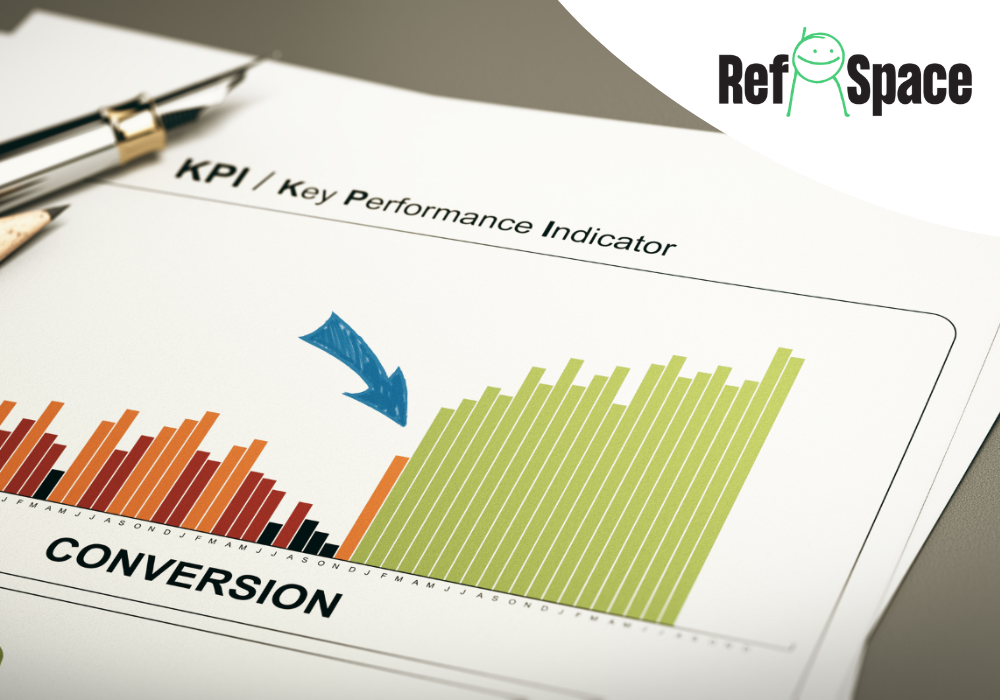
How to improve conversion in your store? Find out what A/B tests can do for you!
Increased traffic on your website does not always mean increased sales. Sometimes the issue is not the lack of visitors, but rather that too few make the decision to purchase. Instead of investing more budgets in advertising, it is worth examining how your store operates and what can be improved to encourage customers to complete transactions. A/B testing is one of the simplest and safest tools that allows you to make data-driven changes rather than relying on assumptions.
What is conversion optimization and when should you start doing it?
Conversion optimization is practically the continuous improvement of what happens on the page to ensure that a larger number of visitors perform the actions you desire. This could be making a purchase, subscribing to a newsletter, downloading a catalog, or submitting a contact form. In e-commerce, this process is particularly important because even a small increase in the conversion rate – by 1–2% – can mean a real jump in revenue without increasing website traffic. Instead of investing larger budgets in advertising campaigns, you can achieve more by focusing on what you already have.
It’s worth starting when you see that the number of visits is increasing, but sales remain stagnant. Often, the reason is that key elements for purchase decisions are not sufficiently refined – sometimes it’s about a too lengthy purchasing process, sometimes about a lack of sufficient trust signals. Conversion optimization allows you to identify and remove these obstacles, and A/B testing becomes a tool that verifies whether a specific change actually works to your advantage.

Discover the potential of your personal brand!
Join a platform where creators can earn money online and build their personal brands by recommending products and services from brands and partners they truly respect.
A/B testing – is it really the simplest way to increase sales?
The advantage of A/B testing is that you base your decisions on hard data, not on hunches. Two variants of the same page are shown simultaneously to similar user groups, and you compare their results. If version B has better metrics, you implement it permanently. If not, you discard the idea without the costs associated with full implementation. This approach minimizes the risk of making changes that would worsen sales results.
However, it’s important to be aware that A/B testing itself is not a magic “more sales” button. You need a good plan, knowledge of your customers, and the ability to interpret results. A poorly designed test – for example, one where you introduce several changes at once – can lead to incorrect conclusions. Therefore, you will achieve the best results when you test single elements and clearly define what you want to improve.
How to set goals and metrics so that A/B testing actually makes sense?
Without clearly defined goals, tests become random experiments. Macro goals, such as completing a transaction or subscribing to a newsletter, indicate the main direction of activities. In contrast, micro goals, like clicking the “Add to cart” button or downloading a PDF, allow you to capture smaller but significant changes in user behavior. It’s worth establishing from the start which are most important to you.
Equally important are metrics that help assess the effectiveness of actions. Conversion Rate (CR) will show the overall effectiveness of the page, CTR will assess how a specific element performs, and the average order value (AOV) will indicate whether customers are buying more. Add to this an analysis of the bounce rate to see where you are losing users. Only then will your A/B tests have real business value and not just be a statistical exercise.
What to test in your store first to see quick results?
The most commonly tested elements are those that directly affect purchase decisions. These can be headlines on the homepage, CTA buttons, the length and layout of forms, or the content of a product page. Changing the message in the headline, adding customer reviews, shortening a form to 3 fields, or changing the color of the “Buy Now” button can noticeably increase conversion.
It’s good to start with places where you have the highest traffic and the biggest user drop-off. If 70% of customers abandon their cart, even a small improvement at this stage will yield better results than optimizing subpages visited by only a handful of people. The most important thing is to test changes that have the potential for a real impact on sales, not details seen by a small percentage of users.
How to analyze test results to make good decisions?
Analyzing results is the moment when you decide whether the test made sense. It’s not enough to see that one variant “did better” – you need to ensure the result is statistically significant. In practice, this means the test should last long enough (at least two weeks or 1,000 participants per variant) and cover a representative user group.
Pay attention not only to CR but also to other metrics – time spent on the site, basket value, bounce rate. Sometimes a variant with a higher conversion can lower the average order value, which is not beneficial in the long run. Your goal is to improve business results, not just a single metric.
Common pitfalls in A/B testing – what can kill your conversion?
One of the main mistakes is stopping the test too early – lack of statistical significance leads to drawing incorrect conclusions. Another problem is testing on too small samples, which prolongs the study duration and distorts results.
You also need to watch out for seasonal influences – a test conducted during promotions or holidays may yield results that do not repeat in normal conditions. There’s also the risk of overinterpreting data – focusing solely on conversion without analyzing the impact on total sales. Awareness of these pitfalls will allow you to make better decisions and avoid costly mistakes.

CEO of RefSpace LTD, a social e-commerce platform that connects creators, brands, and communities in a single ecosystem. With 25 years in digital marketing and e-commerce, she has been a speaker and panelist at numerous industry conferences. Today, she is developing RefSpace as a new destination for authentic recommendations, content, and sales.